
Nov 20, 2025 · 3 min read
Building a bot hosting platform solo: Cytric
- infrastructure
- security
- fullstack
How I built Cytric, my own bot hosting platform, alone: branding, a Vite front end, Paymenter billing, Pterodactyl on Ubuntu and Cloudflare in front.
This is how I built Cytric, my own bot hosting platform, from the brand down to the server. What it runs on, who does what, and why security sits in the setup, not on top of it.
I started Cytric (it used to be called Cybrance) because I wanted to know what it takes to ship a real platform. Not a demo. Not a tutorial clone. Something people can sign up for, pay for and depend on. The answer: everything, at once.
What a bot hosting platform actually needs
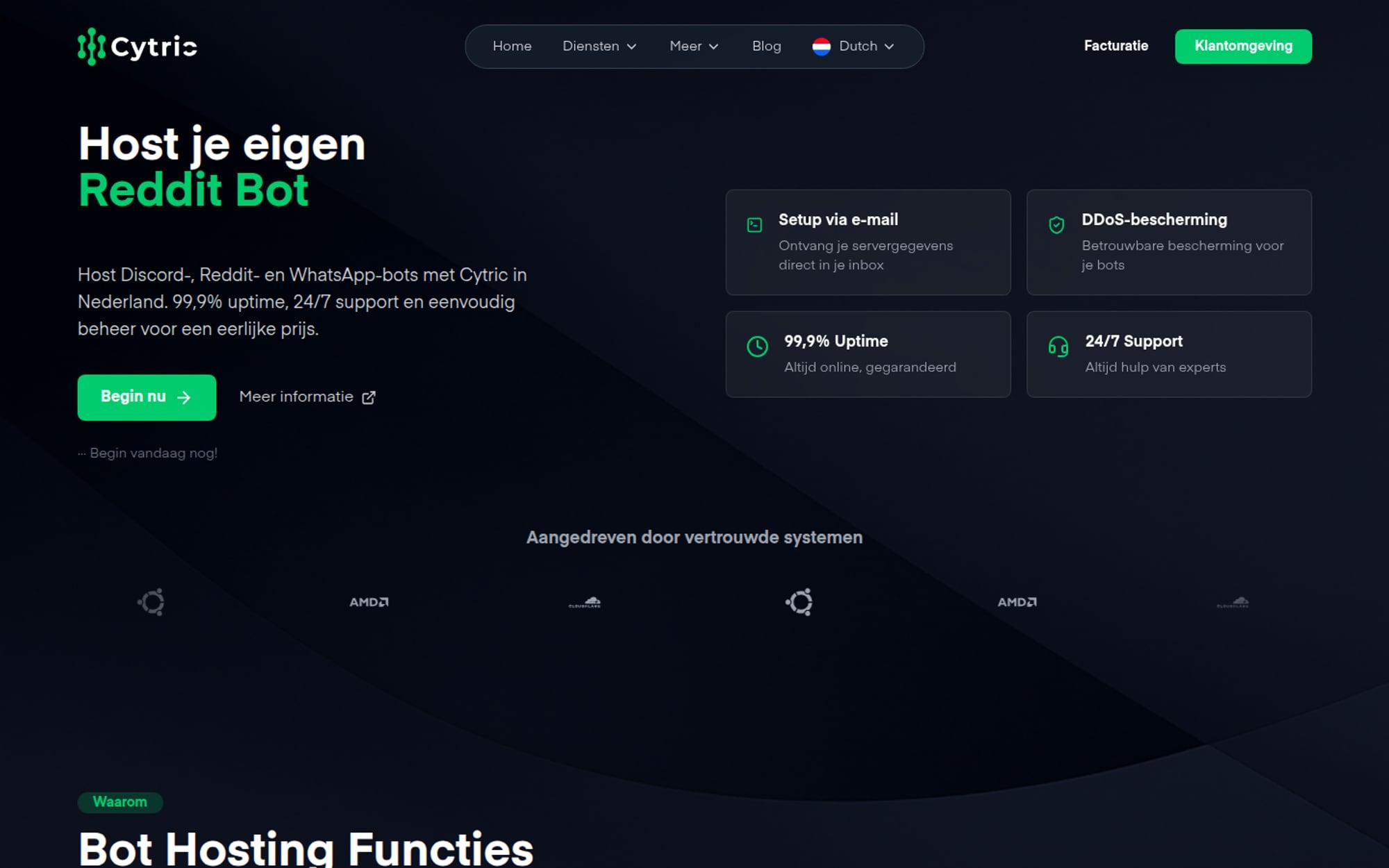
Cytric hosts Discord, Reddit and WhatsApp bots, in Dutch and English. To do that it needs four things, and each one is its own piece of software:
- A front end that sells it. A responsive, branded site, built with Vite, TypeScript and Tailwind CSS.
- Billing. Paymenter handles the subscriptions and the invoices, on its own subdomain.
- Hosting. Pterodactyl on Ubuntu runs the bots, with the networking and security around it to keep them apart.
- An edge. Cloudflare sits in front of everything for caching, TLS and protection.
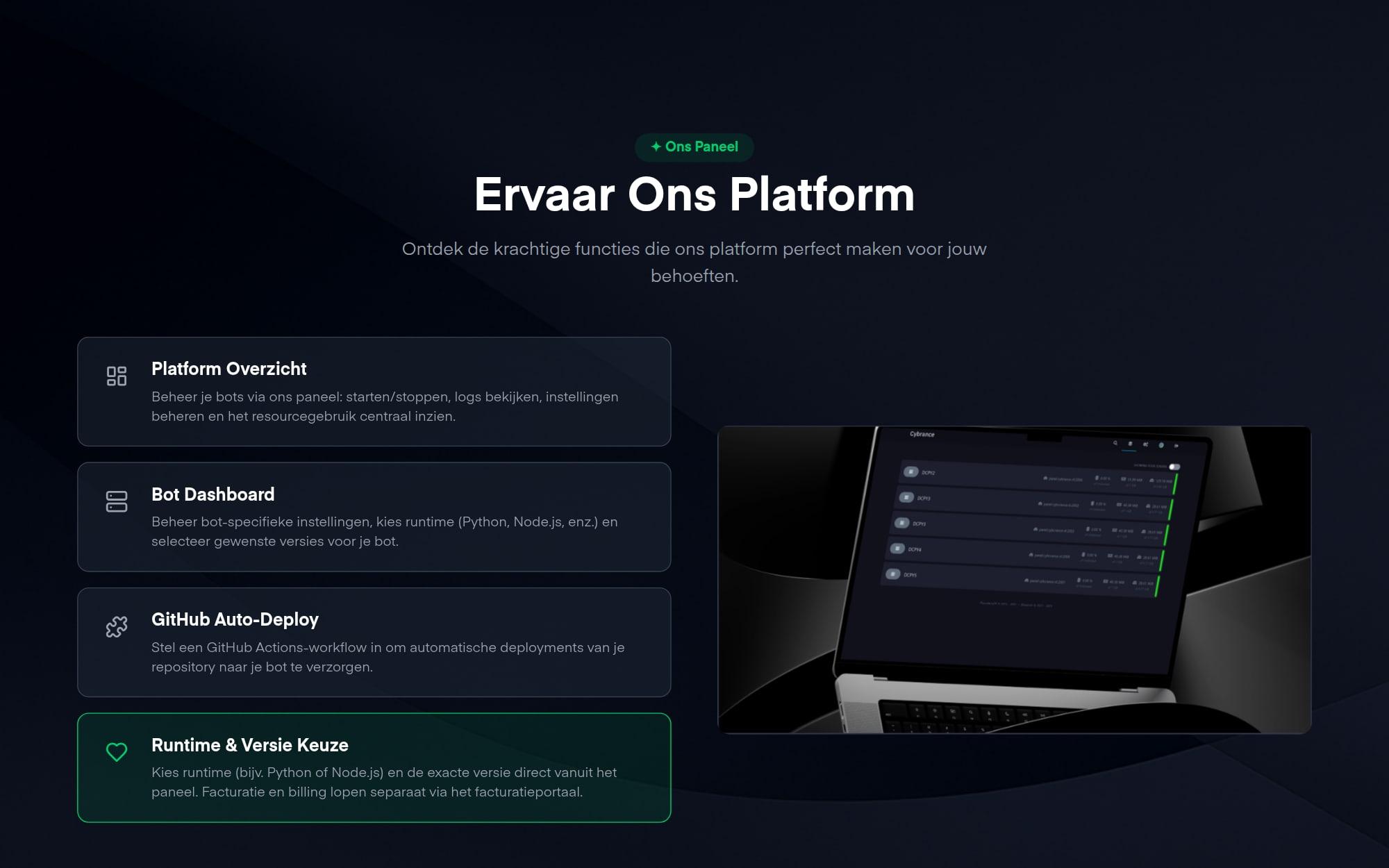
Add a status page and a panel where people manage their bots, and that's the platform. Four systems that have to talk to each other and never leak into each other.
One person, every layer
Build a platform alone and you stop being a "frontend developer" or a "backend developer". You're the one responsible for the branding, the marketing site, the billing flow, the server that runs the bots, the firewall in front of it, and the status page at 2 a.m. when something breaks.
That's exhausting. Sometimes. It's also the fastest way I've ever learned. Nothing stays abstract when you're the only one who can fix it:
- The branding decides what the site looks like, so the site has to obey it.
- The site promises things, so the billing has to deliver them.
- The billing and the panel are two systems, so they have to agree on who paid for what.
- The server runs code I didn't write, so it has to be locked down.
No hand-offs. Every seam between those layers is mine. That's exactly why it's the job I want: it's the same job I do for clients on infrastructure and websites.
Security isn't a feature you add later
This is the part I care about most, and the reason I specialised in cybersecurity at Fontys. Security can't be bolted on at the end. It's a property of how you set things up from the very first commit.
The idea, written down as code:
// Lock down what the platform can do, by default.
const policy = {
  allowOutbound: false,
  isolatedContainers: true,
  rotateSecrets: "30d",
} as const;
Defaults matter. Most users never read a single setting. A platform that's secure by default protects all of them anyway. Secure is the default here, not an extra.
That thinking is the same one behind security-first web development: make the safe path the easy path, and the wrong thing hard to do by accident.
What's next for Cytric
Cytric isn't done, and it won't be. Every round teaches me something new about doing infrastructure properly, and that goes straight back into the client work.
See the whole build on the Cytric case page, or go look at the real thing on cytric.nl.
Good enough is for other people. A platform is where you find out if you mean it.